Golf etiquette for your first round at a club
Golf etiquette is not a separate rulebook, it is built into Rule 1 of the Rules of Golf: play at a prompt pace, look out for the safety of others, and take care of the course. In practice, on your first round, that means keeping up with the group in front, shouting a warning if a shot could reach someone, repairing your pitch marks and divots, smoothing bunkers after you play from them, letting faster groups through, and keeping your phone out of the way.
By Chris, Golf Metric · Updated 23 September 2026 · Facts checked 23 September 2026
The one rule behind all of it
Modern etiquette sits inside Rule 1.2a of the Rules of Golf, which asks every player to act with integrity, show consideration to others, and take good care of the course. There is no separate penalty for bad manners: a committee can only disqualify a player for genuinely serious misconduct, so etiquette runs on trust and consideration rather than punishment. That is exactly why it is worth getting right from your first round: it is how the group around you judges whether you know what you are doing.
Pace: keep up with the group in front
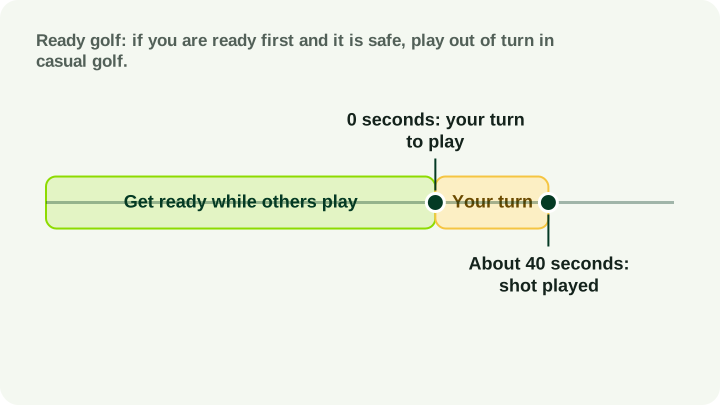
Golf is meant to be played continuously and at a prompt pace under Rule 5.6. When it is your turn, the Rules recommend making your stroke within 40 seconds of being ready to play, usually quicker than that. In practice, keeping up with the group ahead of you, rather than the group behind, is the simplest way to judge your own pace. Playing "ready golf", playing out of turn when it is safe and sensible to do so, rather than strictly waiting for whoever is farthest from the hole, is specifically allowed under Rule 6.4b in stroke play and is one of the easiest ways to speed a round up.
Safety: call it before you hit it
If there is any danger your shot could reach someone, on your hole or the one next to it, shout a warning immediately. The traditional word is "fore", expected the moment you realise a ball is heading somewhere it should not. Standing well back and out of the line of play when it is not your turn, and never swinging a club when someone is close enough to be hit, covers most of the rest of on-course safety.
Looking after the course
Taking care of the course means replacing your divots (the turf your club takes with the shot), repairing your pitch marks on the green (the dent a ball leaves when it lands, allowed under Rule 13.1c), and smoothing the sand after you have played from a bunker, allowed under Rule 12.2b. None of these carry a penalty if you forget, but leaving the course scarred for the group behind you is exactly what etiquette exists to prevent.
Letting faster groups through
If your group is holding up the group behind, the Rules directly encourage you to let them play through rather than have them wait behind you hole after hole. It costs you a couple of minutes and saves everyone else's afternoon. On a busy course, offering it before you are asked is one of the clearest signals that you know the etiquette.
Phones and other distractions
There is no rule that names mobile phones specifically, but Rule 1.2a's call to avoid distracting another player's play covers the same ground: a call, a ringtone or a loud video at the top of someone's swing is exactly the kind of thing consideration for others is meant to rule out. Keep your phone silent, and step away from the group if you need to take a call.
For juniors and first-timers
Nobody expects perfect etiquette on your first round. Watch what the more experienced players in your group do, ask if you are not sure whose turn it is or where to stand, and treat every one of these points as a habit to build rather than a test to pass first time.
Questions people ask
Do I have to rake a bunker after playing from it?
It is not a rule you can be penalised for skipping, but it is expected. Taking care of the course, including smoothing sand after your shot, is part of the standard of conduct the Rules of Golf ask every player to meet.
What does "ready golf" mean?
Playing out of turn, in a safe and sensible way, to help the round move along, rather than waiting rigidly for whoever is farthest from the hole. It is specifically allowed in stroke play and is one of the easiest ways a group can speed up.
How fast should I play once it is my turn?
The Rules recommend making your stroke within about 40 seconds of being able to play without interference, and usually quicker than that. Preparing for your shot while others are playing theirs is the easiest way to stay inside that.
What do I shout if my ball might hit someone?
"Fore", loudly, the moment you realise a shot is heading somewhere it should not. It is the traditional warning and virtually every golfer will recognise it instantly.
Is it rude to let a faster group play through?
No, it is the opposite. The Rules specifically encourage slower groups to let faster ones play through, and doing so without being asked is one of the clearest signs of good etiquette on a busy course.
Read next
Sources
- The R&A, Rules of Golf, Rule 1 (The Game, Player Conduct and the Rules), checked 23 September 2026
- The R&A, Rules of Golf, Rule 5 (Playing the Round), checked 23 September 2026
- The R&A, Rules of Golf, Rule 6 (Playing a Hole), checked 23 September 2026
- The R&A, Rules of Golf, Rule 12 (Bunkers), checked 23 September 2026
- The R&A, Rules of Golf, Rule 13 (Putting Greens), checked 23 September 2026
Spotted something out of date? Email chris@ai-metric.com and we will check it against the source.