Temporary greens, trolley bans and preferred lies explained
Clubs move play to a temporary green, restrict trolleys, or allow preferred lies (lifting and placing your ball) when frost, rain or waterlogging would otherwise damage the course. All three are the greenkeeper protecting the turf, not a change to how you're meant to play.
By Chris, Golf Metric · Updated 23 September 2026 · Facts checked 23 September 2026
What each one is
Temporary greens are a smaller, separate cut of grass, usually on the approach in front of the real green, that the club puts into play instead of the main green. Trolley bans stop push and electric trolleys, and sometimes buggies, being taken onto parts of the course, or all of it. Preferred lies let you lift, clean and place your ball a short distance from where it landed, instead of playing it as it lies. All three exist for the same reason: protecting the course when it cannot take normal traffic.
Why clubs use temporary greens
Grass on a green is mown short and stressed even in good conditions. Greenkeepers' trade body BIGGA explains that in frost, water inside the grass cells freezes and expands, and footfall on frozen grass bruises or kills the plant from the inside, damage that will not heal until the grass starts growing again in spring. Waterlogging causes different damage: wheels and feet compact wet soil, and the grass on top can die back. Moving traffic to a temporary green during frost or heavy wet gives the main green a rest until it can recover.
Not every club agrees. BIGGA also reports course managers who keep members on full greens through winter, arguing the income from a full course matters more to a small club than the risk, and that some greens have shown little extra wear either way. Whether a course uses temporary greens, and how readily, is a decision for each club, not a rule set nationally.
Why clubs restrict trolleys
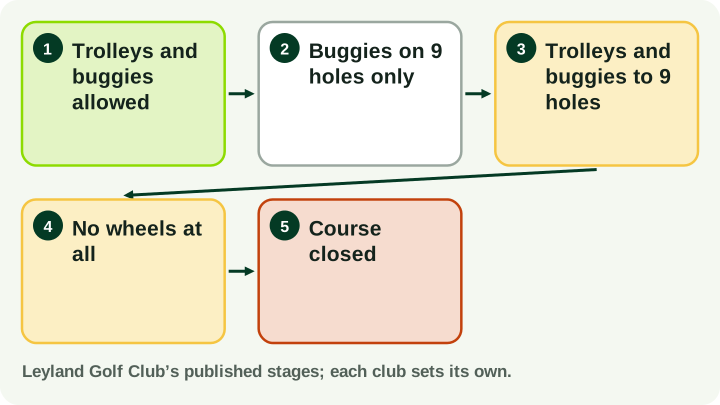
Wet or frozen ground compacts under a trolley wheel in the same way it does under a foot, so clubs often route trolleys away from vulnerable ground rather than ban them outright. Fairhaven, on the Fylde coast, asks players in its local rules not to take trolleys or buggies between the edges of greens and bunkers, a standing rule rather than a weather one. Leyland, further inland, runs a five-stage course status system: full use of trolleys and buggies on designated routes at Stage 1, buggies cut back to 9 holes at Stage 2, both trolleys and buggies cut to 9 holes at Stage 3, no trolleys or buggies at all on a 9-hole composite course at Stage 4, and the course closed at Stage 5. Some clubs also allow trolleys fitted with wider "winter wheels" to keep moving when a standard trolley would be stopped.
There is no single national trolley-ban rule. Check the club's own website or course-status page, not general habit from another course.
Preferred lies: the actual rule behind "winter rules"
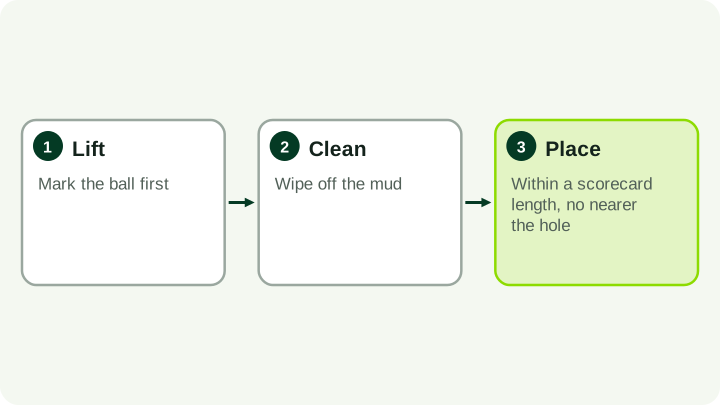
What golfers call "winter rules" is a Local Rule, Model Local Rule E-3, published by The R&A. It lets a committee allow players, once per shot, to lift their ball from a closely mown area, clean it, and place it again within a short, stated distance of where it lay (commonly six inches or a scorecard length), no nearer the hole. The R&A's own winter rules guidance says it exists for when weather has left ground conditions poor across the course, so play stays fair and fairways are not chewed up by players hunting a better lie by hand. It should come off again as soon as conditions improve.
England Golf sets the season in which a club can apply preferred lies without asking permission first: from 1 October to 30 April, and only where ground conditions genuinely make the lie unfair, on closely mown areas such as fairways. A club that wants to use it outside that window needs its county's permission first.
Does it affect your score?
England Golf's own guidance is direct on this: a score returned while preferred lies are in force still counts as an acceptable score for handicap purposes, provided the club has published the Local Rule properly under Model Local Rule E-3. If you are ever unsure whether a preferred-lies notice is officially in force, or just a habit at the club, ask in the pro shop before you rely on it for a qualifying round.
What this means for your round
None of the three change how the course plays for scoring against par, beyond the specific relief preferred lies give you. They exist to protect turf that could take months to recover otherwise. If a course is on temporary greens or under a trolley ban the day you play, expect a shorter walk to some pins and a different carry route for your bag; check the club's own site or ring the pro shop before you travel, since none of this shows up in a weather forecast.
Questions people ask
Do preferred lies affect my handicap?
Not if the club has done it properly. England Golf says a score played under preferred lies is still an acceptable score for handicap purposes, as long as the club has published a proper Local Rule for it under the Model Local Rule E-3. Ask in the pro shop if you are not sure it is in force.
Can I use my own trolley wheels to get round a trolley ban?
Some clubs allow trolleys with winter wheels (wider, studded tyres that spread the load) even when a standard trolley ban is on, others do not. It is a club-by-club call, so check the notice board or the club's website before you set off.
Why do some clubs never use temporary greens?
Cost and income. A club that plays on its main greens through winter keeps full green fee income, and some report little extra damage. Others judge the risk to spring recovery is not worth it. Both are legitimate choices; it comes down to the individual course.
How do I find out if a course is on temporary greens or under a trolley ban today?
The club's own website or course-status page is the only reliable answer; some, like Leyland, publish a numbered stage system online. Golf Metric's weather score cannot see this, so always check with the course before you travel.
Read next
Sources
- The R&A, Model Local Rules, Section E: Course and Weather Conditions (E-3, Preferred Lies), checked 23 September 2026
- The R&A, Winter Rules FAQs 2025/2026, checked 23 September 2026
- England Golf, Adverse/Extreme Weather Reference Guide, checked 23 September 2026
- BIGGA, "Why do some clubs use temporary greens, while others don't?", checked 23 September 2026
- BIGGA, "Should you play on winter greens when it is frosty?", checked 23 September 2026
- Fairhaven Golf Club, Local Rules, checked 23 September 2026
- Leyland Golf Club, Course Status Info, checked 23 September 2026
Spotted something out of date? Email chris@ai-metric.com and we will check it against the source.